
Foundation comparison

Ground screws
vs concrete.

Compare excavation, spoil, programme, access, floor design, approvals and the complete installed cost—not simply one screw against one quantity of concrete.

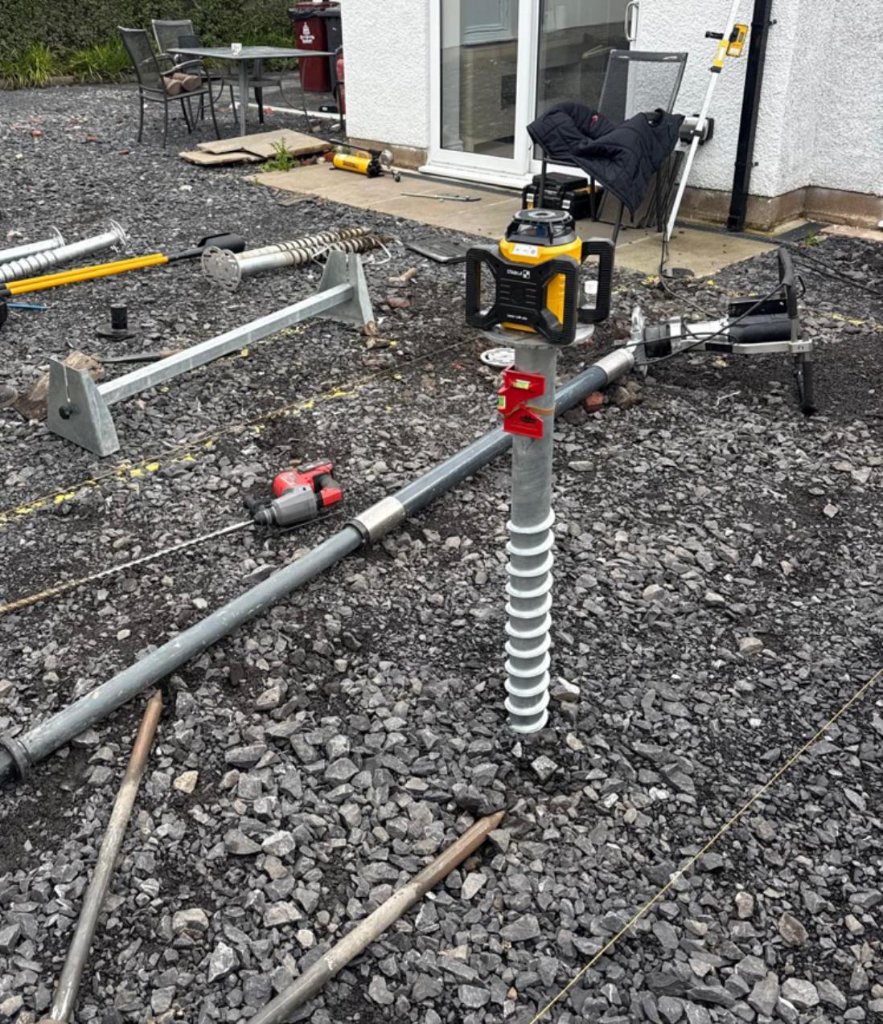
Mechanically installed ground screw foundation on a UK project site
Choose around the building and site
Foundation · floor · ground · access · programme
Direct answer

Neither system wins every project.

Ground screws are often strongest where a framed building can sit on discrete support points and reduced digging, spoil and curing time have real value.

Concrete is often strongest where the design needs a slab, continuous bearing, masonry support or a conventional foundation strategy.

The sensible comparison uses the same building drawings, the same site constraints and the same finished scope.

Like-for-like comparison

Ground screws and concrete, factor by factor.

FactorGround screwsConcrete foundations
Foundation formDiscrete steel support points coordinated with the structure.Pads, strips, rafts, slabs or other continuous concrete solutions.
ExcavationOften reduced because support points are mechanically installed.Usually requires excavation, preparation and formwork appropriate to the design.
Spoil & logisticsCan reduce excavated spoil and concrete deliveries on suitable sites.Excavated material, concrete deliveries and placement must be managed.
ProgrammeNo concrete curing period for the screw foundation itself.Programme includes placing, protection and the specified curing process.
Building interfaceHeads, brackets or beams connect the support points to the frame above.The structure bears onto the designed concrete foundation or slab.
Ground riskObstructions, weak layers, rock and variable ground can change the screw solution.Ground conditions also affect excavation, concrete design and bearing strategy.
AccessEquipment must reach and safely work at each screw position.Excavators, concrete wagons, pumps or barrowing routes may be required.
ApprovalsProduct, load, ground and installation evidence may be requested.Concrete design, reinforcement, ground and construction records may be requested.
Future removalSome systems can be removed, subject to product condition and project design.Normally treated as a permanent construction.
Best fitFramed buildings that can be supported efficiently on individual points.Projects needing slabs, continuous support or a conventional concrete strategy.
Decision factors

What usually changes the answer?

Digging & access

Compare excavation, working space, delivery routes, machinery and spoil removal for the actual site.

Build programme

Include design, mobilisation, installation or pouring, curing and when the next construction stage can begin.

Complete installed cost

Include every product, connection, beam, delivery, test, labour item, exclusion and VAT basis.

Building & floor

The support arrangement must suit the frame, spans, walls, floor build-up and concentrated loads.

Ground conditions

Rock, made ground, water, obstructions and weak layers can affect either foundation route.

Removal & future use

Some screw systems may be removable; concrete is normally treated as permanent construction.

Typical scenarios

How the decision changes by project.

These are decision prompts, not automatic specifications. The final foundation still follows the actual structure and site.

01

Garden room or framed office

Ground screws

Often a strong candidate when the floor frame can span between planned support points.

Concrete

May suit where the proposed floor or building package specifically needs a slab.

02

Raised or sloping deck

Ground screws

Individual adjustable support points can reduce excavation and help establish levels.

Concrete

Pads remain possible but require excavation, setting-out and curing at each support.

03

Extension or modular building

Ground screws

Can work where the loads, ground, frame connections and approval evidence are properly developed.

Concrete

May remain preferable where a slab, masonry support or continuous foundation strategy is required.

04

Difficult or obstructed ground

Ground screws

Not automatically suitable. Refusal, rock, services or made ground may require investigation or a changed solution.

Concrete

Not automatically simple either; excavation, disposal, dewatering or deeper construction may be required.

Quotation checklist

Compare the same finished foundation.

A comparison is meaningless if one quote includes the complete foundation and the other excludes the support beams, excavation or installation.

Structural design basis
Ground information and assumptions
Excavation and spoil
Screws or concrete specification
Heads, brackets or reinforcement
Support beams and floor interface
Installation labour and plant
Testing and project records
Delivery, travel and mobilisation
VAT, exclusions and programme
Ground screws vs concrete FAQs

The comparison questions buyers ask.

Direct answers on cost, speed, slabs, disruption, commercial buildings and when another foundation is the responsible choice.

01

Are ground screws better than concrete foundations?

Ground screws can be better where reduced excavation, limited disruption, fast progress and discrete support points suit the building. Concrete can be better where a slab, strip, raft or continuous foundation is required. The correct answer depends on the building, ground, access and approval route.

02

Are ground screws cheaper than concrete?

They can be, but only a like-for-like installed comparison is useful. Compare excavation, spoil removal, concrete, labour and programme against the screws, installation, heads, brackets, beams, testing and any engineering.

Compare complete cost factors
03

Are ground screws faster than concrete?

Ground screws do not require a concrete curing period and can reduce digging, so the foundation stage can be quicker on a suitable project. Design information, access, set-out, ground conditions and project size still affect the programme.

See the installation timeline
04

Do ground screws need concrete?

The screw foundation itself normally creates support points without pouring concrete around each screw. Other parts of the building may still use concrete where the design requires it.

05

Can ground screws replace a concrete slab?

Ground screws replace foundation support points, not automatically the functions of a slab. The floor system above must be designed to span between supports and deal with insulation, moisture, ventilation and finished-floor requirements.

06

When should I not use ground screws?

Another foundation may be better where the ground cannot provide a suitable installation, buried obstructions prevent the layout, loads exceed the chosen system, the structure requires a slab or continuous support, or project evidence cannot satisfy the designer or Building Control.

See other foundation options
07

Are ground screws suitable for extensions and commercial buildings?

Potentially. Extensions, modular buildings and commercial frames require project-specific loads, support positions, ground evidence, connections and approval information. They should not be treated like a small garden-building installation.

Read the Building Regulations guide
08

Which foundation causes less garden disruption?

A suitable ground screw installation can reduce excavation, spoil and wet concrete operations. Machinery still needs safe access and the actual level of disruption depends on screw quantity, equipment, ground and working space.

09

How do I compare ground screw and concrete quotations?

Use the same drawings and scope for both. Check foundation design, excavation, spoil, products, installation, beams or brackets, testing, drainage, floor build-up, delivery, VAT, exclusions and when the next trade can start.

Compare your project

Not sure which foundation fits?

Send the structure, dimensions, postcode and site information you have.

Discuss the project